
How to stay motivated to exercise comes down to building a habit rather than waiting for motivation: set a small, scheduled weekly routine, cue it with visible gear, and keep going after a missed session.
Once the routine is running, how much exercise do adults need per week shows the weekly total to build toward. The steps below focus on keeping the routine alive.
Before you start
A weekly exercise habit needs very little equipment, but it does need a few decisions made in advance. Settle these before the first session so that nothing has to be decided on the day.
- A modest starting point. Choose a session length you could complete on your worst day, not your best one.
- A fixed place for your gear. Pick a spot in the home where clothes or equipment will be seen every day.
- A planner or calendar. Paper or digital works, as long as sessions can be written in ahead of time.
- A way to record sessions. A simple tick sheet is enough to show whether the routine is happening.
The expected outcome is a routine you follow because it is already planned, not because you feel like it that day.
Building the weekly habit step by step
The six steps below move from understanding why motivation fails, through setting up the routine, to handling the weeks that go wrong.

Step 1: Rely on a routine, not on motivation
Motivation is an unreliable foundation for exercise. National Wellness and Fitness notes that motivation is unpredictable and comes and goes, and that many people struggle to keep up workouts because they depend on fleeting motivation instead of building lasting habits.
The practical answer is to build a system that works on low-motivation days. The same source points out that habits eliminate the daily debate about whether or not to work out. Once a session is simply “what happens on Tuesday”, the decision has already been made and the effort goes into doing it.
Step 2: Set a small, specific goal
Small goals suit anyone starting or restarting. For beginners, the same National Wellness and Fitness guide suggests starting with small, achievable steps, such as a 15-minute workout three times a week. A target this size is easy to repeat, and repetition is what a habit needs.
Short-term goals also help. AHC Health e-News says that setting short-term goals can have a tremendous impact on adhering to a workout program. It also warns that a vague aim, such as simply saying you want to lose 50 pounds, may not be a realistic goal. A better goal names the action you control, for example the session you will complete this week, rather than an outcome that depends on many other things.
Make the goal a little easier than seems necessary. Increasing it later is simple, while a goal that is too ambitious tends to produce skipped sessions.
Step 3: Schedule sessions like appointments
Write each session into the week before the week starts. TIME reports that treating a workout like an appointment helps you stay committed. This is a simple form of implementation intentions: a plan that ties a specific moment to a specific action, so the session does not compete with whatever else the day brings.
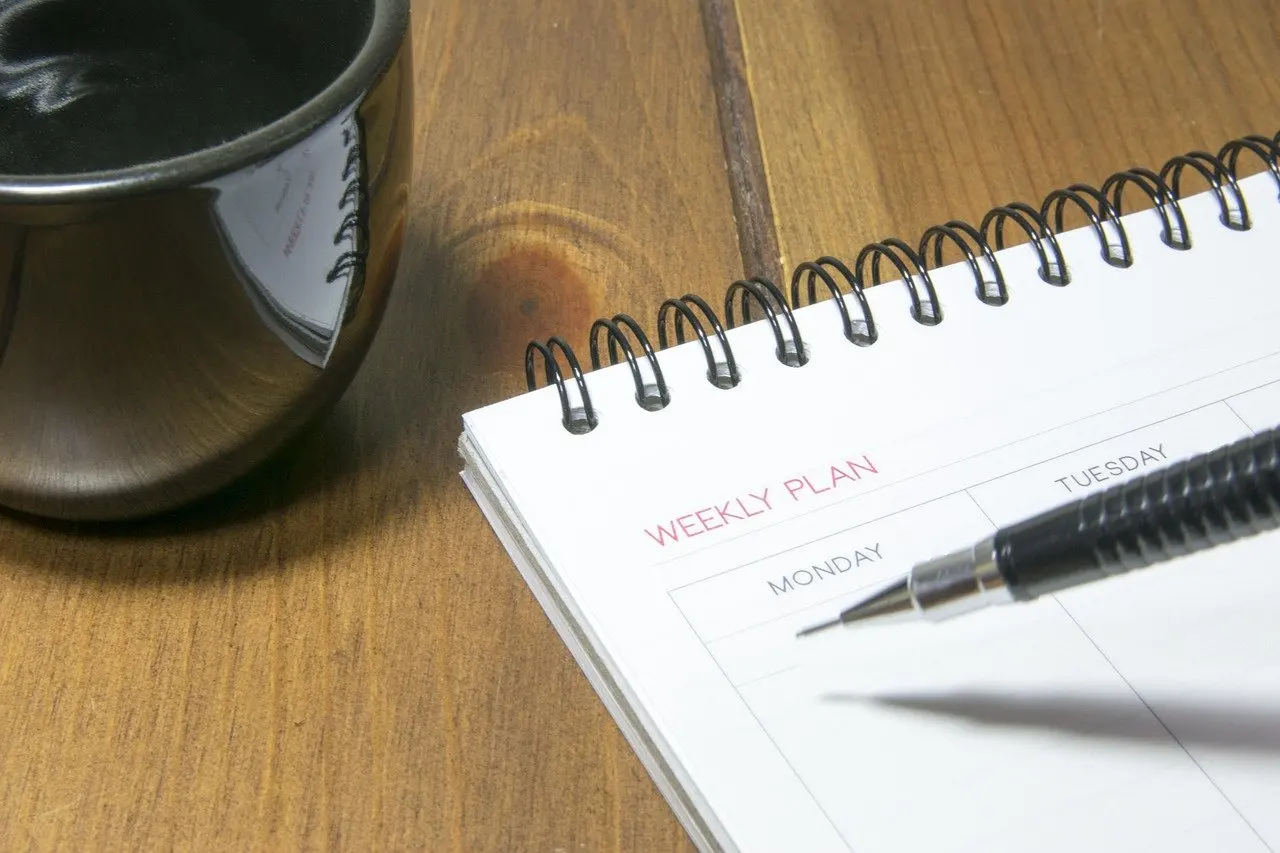
This is also the most direct answer to fitting exercise into a busy week. Look at the days that are already crowded and place short sessions there, because a full week is exactly when a flexible “I’ll fit it in” plan collapses. When time is tight, shorten the session rather than cancelling it. According to National Wellness and Fitness, even a 10-minute session is better than nothing, and keeping the appointment protects the routine itself.
Step 4: Put a visible trigger in place
A habit loop has three steps: trigger, action and reward. The trigger is something that signals the start of the behaviour, and it is the step most people leave to chance.
Make the trigger physical. National Wellness and Fitness lists placing your workout clothes or equipment where you can see them as a way to cue the behaviour. Laying kit out the evening before, or leaving shoes by the door, removes the small decisions that give a tired mind a reason to put the session off.
Step 5: Record sessions and protect consistency
Consistency matters more than intensity when you are building a habit. National Wellness and Fitness puts it plainly: consistency beats intensity when it comes to building habits. A moderate session you actually complete does more for adherence than an ambitious one you abandon halfway.
Recording each completed session gives the loop a reward you can see. A tick on a sheet at the end of every workout is enough. Over a few weeks the page shows whether the routine is real, and it makes a gap easy to spot early, while it can still be fixed.
Step 6: Plan for missed sessions and low periods
Missing a session is expected, so decide in advance how you will respond. National Wellness and Fitness states that missing one workout isn’t a failure, but repeatedly skipping them can derail your progress. The rule that follows is to return at the next scheduled slot, not to wait until you feel ready.
When motivation drops, resist the urge to read it as proof that the plan has failed. AHC Health e-News suggests viewing failure as an opportunity for self-growth. In practice, ask what got in the way: a slot at the wrong time of day, a goal that was too big, or gear that was out of sight. Then change that one thing.
Recovery belongs in the plan too. TIME points out that you have to give your muscles and body a chance to recover, so a rest day is part of the week, not a lapse in it. Recovery starts inside each session as well, and the guide on how to cool down after workout explains that part of the routine.

Weekly checkpoint
A short review once a week shows whether the habit is holding. Use the table to see which part of the routine needs adjusting.
| Checkpoint | What to look for | Planning use |
|---|---|---|
| Goal size | A beginner start such as a 15-minute workout three times a week | If sessions are being skipped, shrink the goal before changing anything else. |
| Schedule | Every session written down like an appointment | Move any session without a fixed slot into the calendar for next week. |
| Trigger | Workout clothes or equipment visible where you will see them | If starting feels hard, move the gear into your line of sight. |
| Missed sessions | One missed workout is not failure; repeated skipping derails progress | After a miss, return at the next slot. After repeated misses, change the slot or the goal. |
These checkpoints draw on guidance from National Wellness and Fitness and on TIME.
Weeks with a few misses are normal. The warning sign is a pattern, so change the setup if the same session keeps falling through.
Frequently asked questions
Do small goals help people keep exercising?
Yes. A small goal is easier to repeat, and repetition builds the habit. AHC Health e-News links short-term goals with better adherence to a workout program.
What should I do when I lose motivation?
Fall back on the routine rather than waiting for the feeling to return, since motivation naturally comes and goes. If the loss lasts, look for the practical obstacle and fix it.
Does a short session count?
Yes. National Wellness and Fitness says even a 10-minute session is better than nothing, so a short workout is a better choice than a skipped one.
Is one missed workout a setback?
No. One missed workout is not a failure. The risk comes from skipping repeatedly, so resume at your next planned session.