The best Mediterranean diet snacks pair at least two macronutrients, such as plant fiber with protein or unsaturated fat. Hummus with raw vegetables suits a desk, apple with almond butter suits travel, and yogurt with walnuts suits the evening.
These ideas sit inside a wider eating pattern. For the full picture of meals and food groups, see dieta mediterranea cosa mangiare, the hub for balanced eating for adults.
What makes a snack Mediterranean
A Mediterranean snack is built from the same ingredients as the meals: fiber from plants, protein from legumes or dairy, and unsaturated fats from olive oil, nuts and seeds. That combination is described in a guide to Mediterranean snacks that keep you full, which also stresses that the most effective snacks combine at least two of those building blocks rather than relying on one.
The items below are not ranked, because nothing in the evidence places one snack above another. They are ordered by the situation in which each one is easiest to eat: at a desk, while travelling, and in the evening. Each entry states a portion, so the snack stays a snack and does not drift into a second meal.
- Fiber first. Vegetables, fruit and chickpeas supply the plant fiber that gives a snack bulk.
- A second component. Protein from yogurt, beans or a little cheese, or fat from nuts and olive oil, turns fiber into a lasting snack.
- Slow-release carbohydrate. Mediterranean snack ideas favor foods with a low glycemic index, meaning they release glucose slowly.
- Whole ingredients. The pattern favors recognisable foods over packaged products.
Desk snacks
At a desk the best snack is one that needs no cooking, can be portioned in advance and does not leave a sugar dip behind. Both options below keep well in a small container and suit people who snack mid-morning or mid-afternoon between meetings.
Raw vegetables with hummus
The portion is 1 cup raw vegetables with 1/4 cup hummus, which delivers around 150 calories according to the same snack guide. The chickpeas in hummus supply both soluble and insoluble fiber, and the vegetables add more plant fiber on top.
This suits anyone who wants something crunchy and filling that is still easy to measure. The calorie figure applies to that quarter-cup, so scooping straight from a large tub removes the benefit of a stated portion. Spoon the hummus into a small pot first and dip from there.
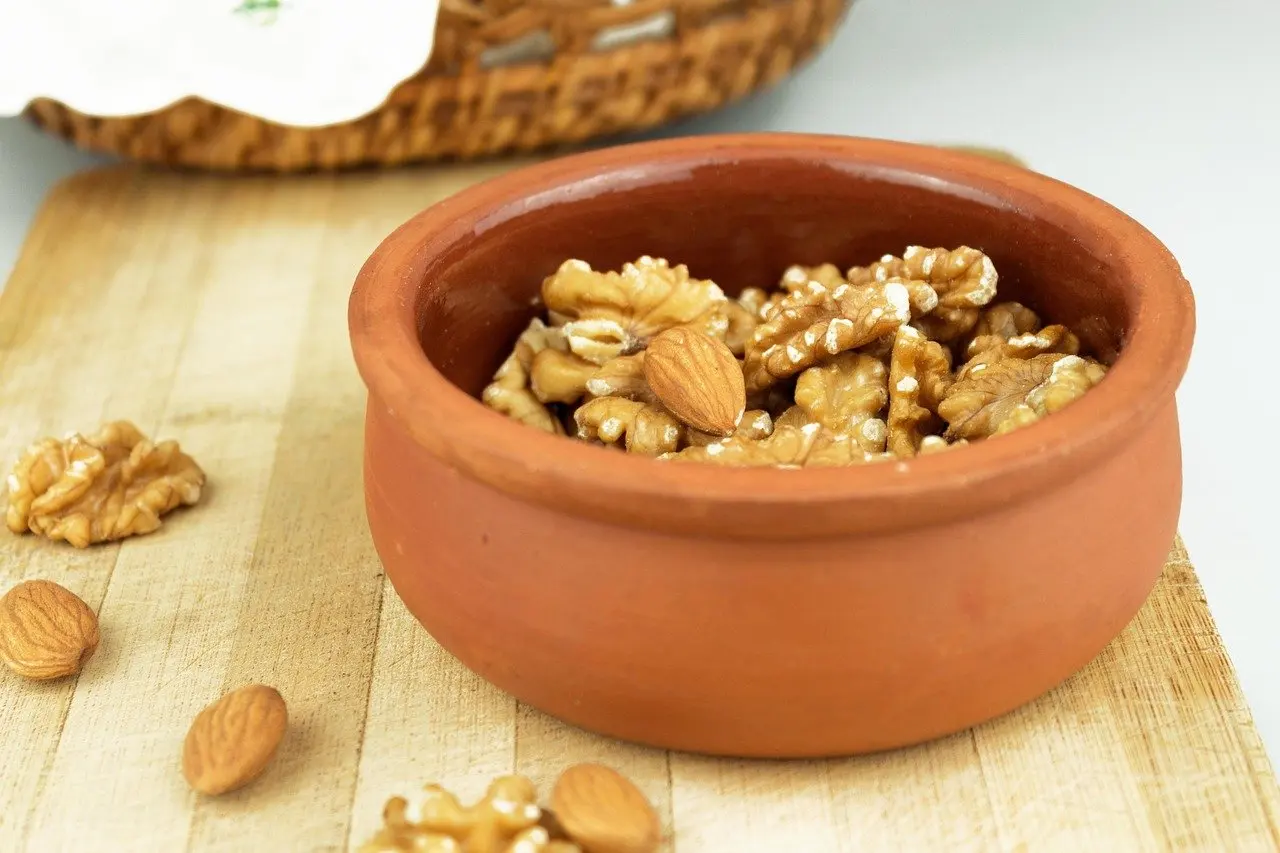
A handful of walnuts and almonds
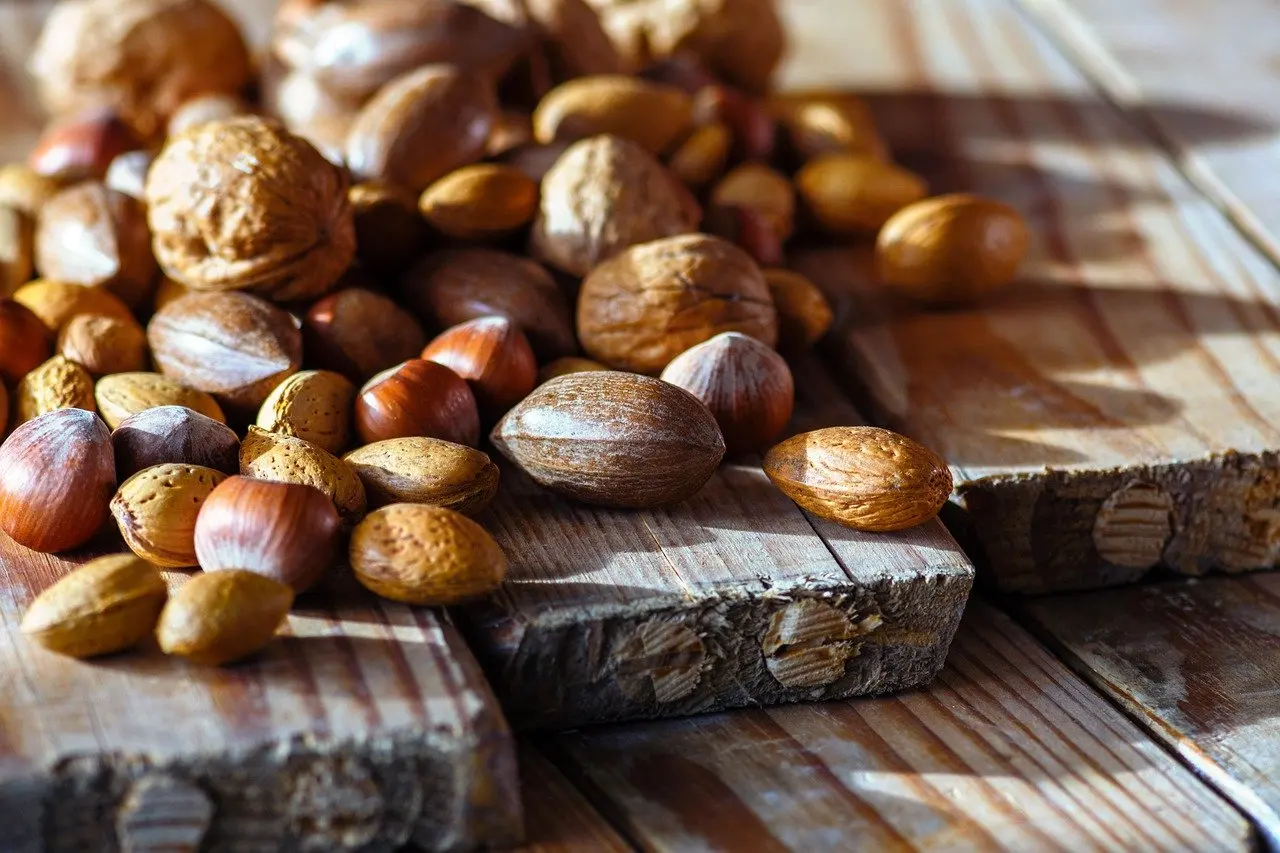
A handful of nuts is the simplest desk snack of all. Walnuts provide alpha-linolenic acid (ALA), a plant-based omega-3, and nuts in general are among the foods that are particularly rich in polyphenols.
Nuts suit people who dislike prepared snacks or have no fridge nearby. Their limitation is that they are easy to over-eat from an open bag. Fill a small bowl or tin once and stop there. Pair them with a piece of fruit when you want fiber alongside the fat.
Travel and on-the-go snacks
Snacks that travel well are whole, firm and need no spoon. Fruit, nuts and nut butter fit that description, and they avoid the processed, refined-carbohydrate snacks that cause rapid blood sugar spikes followed by crashes. That pattern is the main reason to pack your own on a long train ride or a day of errands.
Apple with almond butter
The portion is 1 small apple with 1 tablespoon almond butter. The Mediterranean snack guide describes this pairing as combining the fiber and polyphenols of the fruit with the fat of the nut butter.
It suits commuters and travellers who want something that holds up in a bag. Carry the almond butter in a small sealed pot or single-serve pack so the tablespoon limit stays practical.
Fresh fruit with nuts
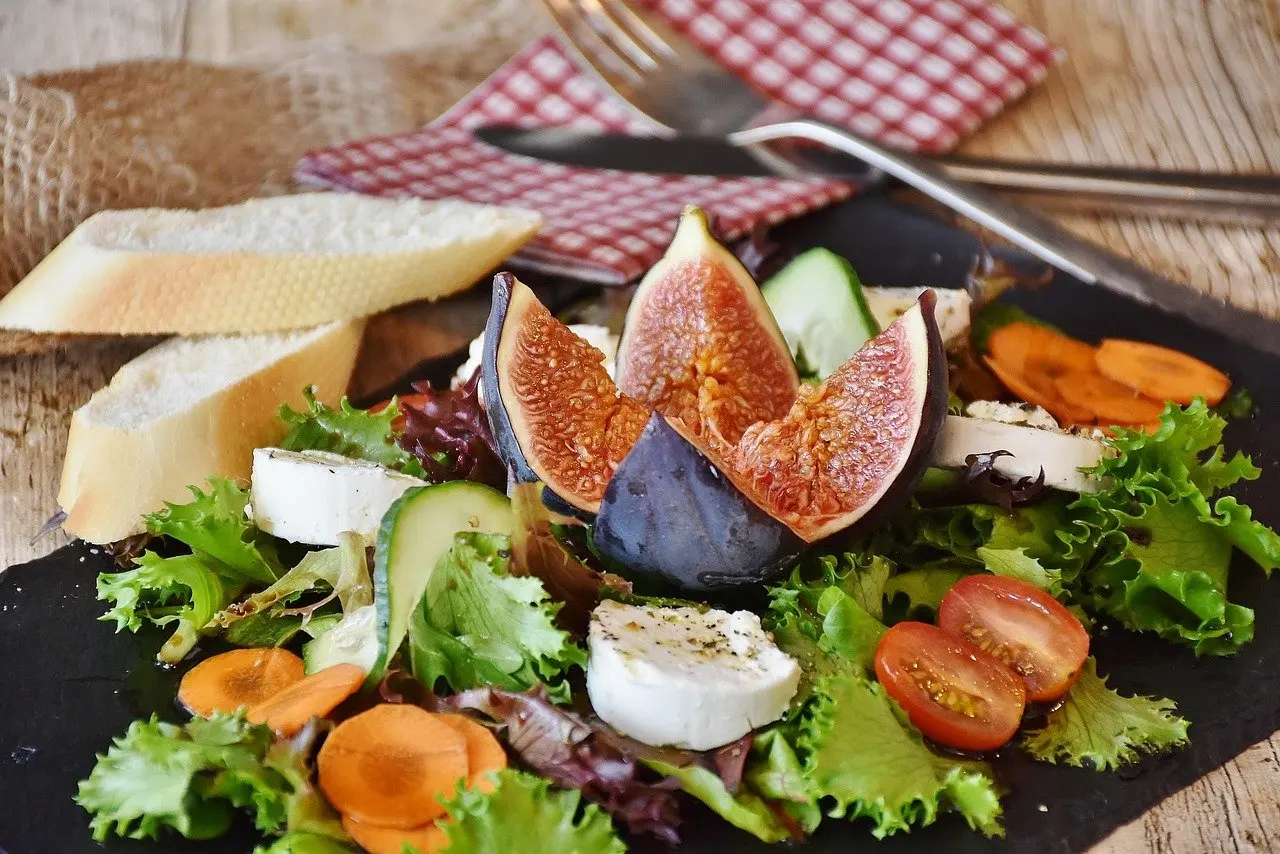
Nuts and fruit snacks are the classic Mediterranean pairing: the fruit contributes fiber and the nuts contribute unsaturated fat. Figs are a seasonal example, but any firm whole fruit works the same way.
Choose this when you cannot refrigerate anything. Whole fruit and nuts need no preparation, and they are the quickest answer to the question of what to eat between a late lunch and an early dinner.
Evening snacks
Evening snacking tends to be the hardest to manage, because the choice is often sweet. The options below keep a little sweetness or salt but add protein or unsaturated fat, which makes them better candidates than refined-carbohydrate snacks.
Greek yogurt with walnuts and honey
Plain Greek yogurt with a handful of walnuts and a drizzle of honey offers high-quality protein plus omega-3s from the walnuts, as the snack guide explains. The honey is a drizzle, not a spoonful, so the yogurt does the filling.
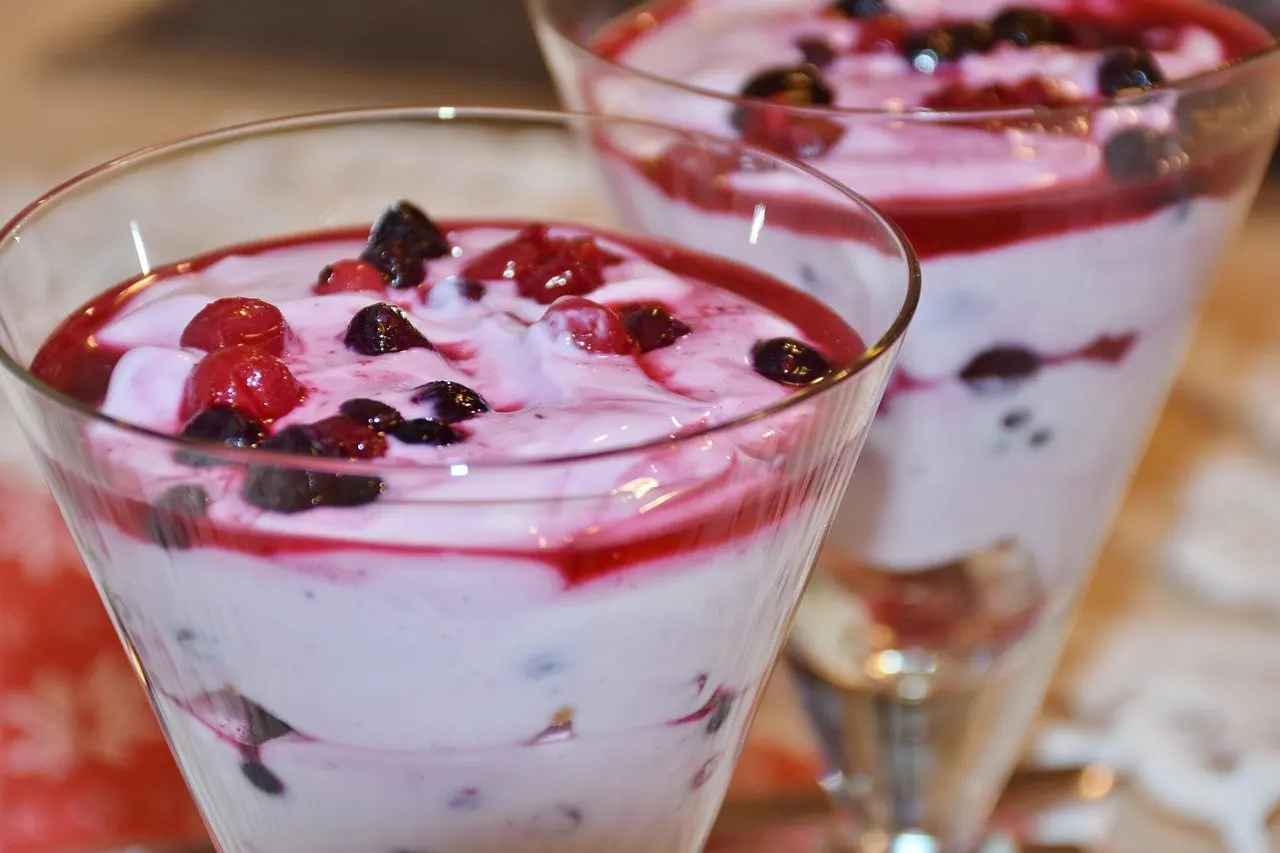
This suits people who want a dessert-like snack after dinner. A jar with a lid also makes it portable, so it works as a desk or travel snack when a fridge is available.
Olives and a small piece of cheese
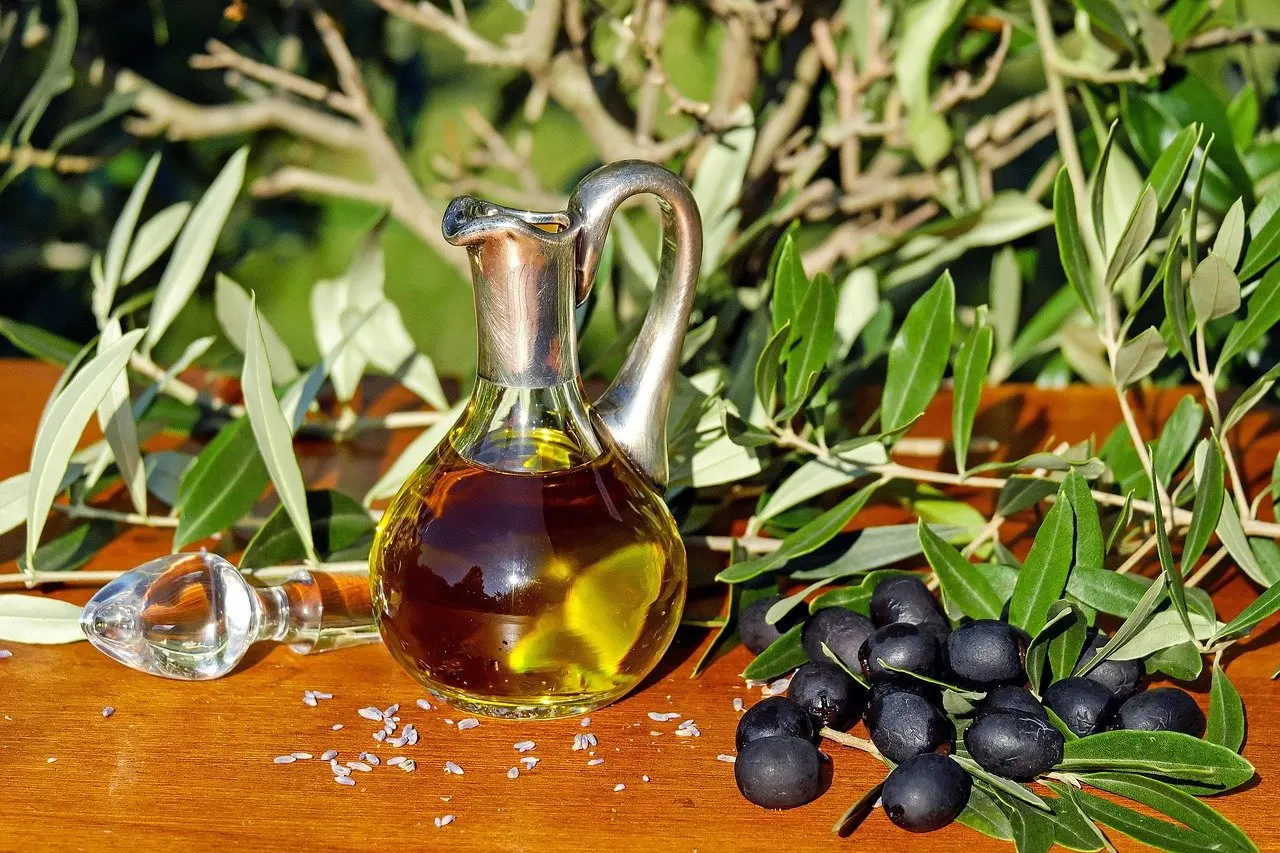
Olives and a small portion of cheese are both suitable. Olives supply monounsaturated fat and are among the foods rich in polyphenols, while cheese is one of the protein sources that support fullness. Keep the cheese to a small portion, as the guidance itself frames it, and serve a few olives alongside rather than a bowlful.
Bread with tomato and olive oil
A slice of bread with tomato and a drizzle of olive oil is the savory option. It pairs a carbohydrate with unsaturated fat from olive oil, which follows the same two-component logic as the other snacks here.
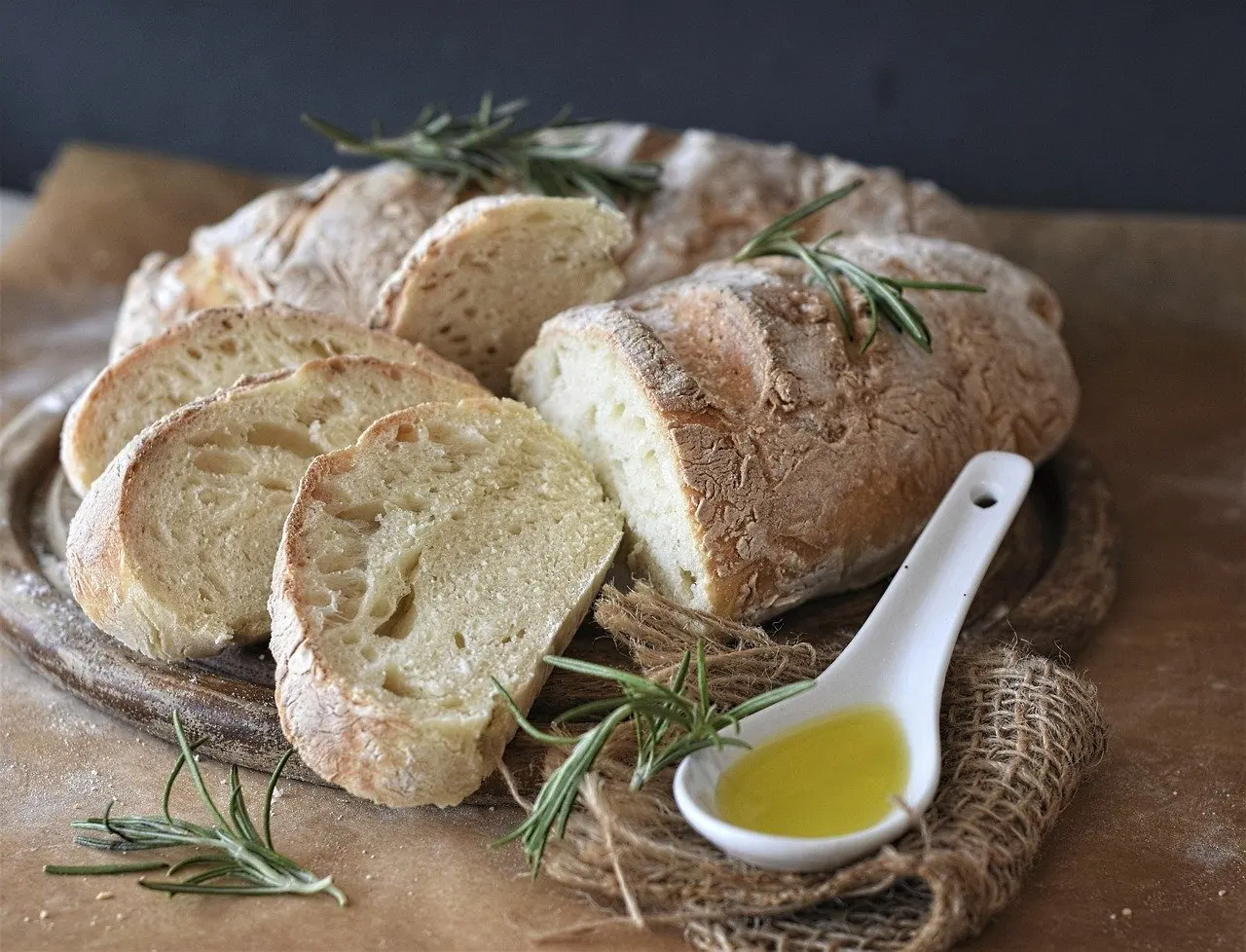
It suits people who prefer a warm, savory snack at home. Since bread alone is a refined carbohydrate in many forms, the tomato and the oil are what make it a balanced snack rather than a plain starch.
Snack comparison by situation
| Situation | Snack | Stated portion | What it pairs | Planning use |
|---|---|---|---|---|
| Desk | Raw vegetables with hummus | 1 cup raw vegetables with 1/4 cup hummus (about 150 calories) | Plant fiber with legume protein | Pre-portion the hummus in a small pot |
| Desk | Walnuts and almonds | A handful | Unsaturated fat with polyphenols; ALA from walnuts | Use a small bowl, not the bag |
| Travel | Apple with almond butter | 1 small apple with 1 tablespoon almond butter | Fruit fiber with nut fat | Carry the nut butter in a sealed pot |
| Travel | Fresh fruit with nuts | A piece of fruit and a handful of nuts | Fiber with unsaturated fat | Best when nothing can be refrigerated |
| Evening | Greek yogurt, walnuts, honey | A handful of walnuts and a drizzle of honey | Protein with omega-3 fat | Keep the honey to a drizzle |
| Evening | Olives and cheese | A few olives and a small portion of cheese | Monounsaturated fat with protein | Keep the cheese small |
| Evening | Bread with tomato and olive oil | A slice with a drizzle of olive oil | Carbohydrate with unsaturated fat | Add tomato to make it more than starch |
The pairings and the hummus and apple portions come from the Mediterranean snack guide; the other portions are described in general terms rather than measured amounts.
Replacing a sugary snack
Fruit and nuts can replace a sugary snack, and the reasoning is straightforward. Processed snacks high in refined carbohydrates cause rapid blood sugar spikes followed by crashes, while Mediterranean snack ideas prioritize low glycemic index foods that release glucose slowly.
In practice, the swap works best when it keeps the same moment and changes the content. If the usual snack is a biscuit with coffee in the afternoon, a piece of fruit with a handful of nuts takes that slot. If it is a late-evening sweet, Greek yogurt with walnuts and a drizzle of honey keeps the sweetness while adding protein.
Snacks work best when they sit comfortably between meals. For the meal that follows an evening snack, browse mediterranean diet dinner ideas, and to stock the pantry with the ingredients above, use this mediterranean diet shopping list.
Frequently asked questions
Can a snack be fruit alone?
Fruit supplies plant fiber, but the most effective Mediterranean snacks pair at least two macronutrients. Adding nuts, nut butter or yogurt to the fruit meets that guideline.
Why do these snacks use olive oil, nuts and seeds?
Monounsaturated and polyunsaturated fats from nuts, seeds and olives are absorbed more slowly than saturated fats, which helps a small snack last longer.
Can legumes other than chickpeas work as a snack?
Yes. White beans are named alongside Greek yogurt and small portions of cheese as protein sources that support fullness.
What does low glycemic index mean for a snack?
It means the food releases glucose slowly rather than in a quick spike, which is why whole fruit, nuts and legumes suit this style of snacking better than refined-carbohydrate snacks.