Quick answer: A Mediterranean diet meal plan works best as three meals a day built around vegetables, legumes, whole grains, olive oil and fish several times a week, with red meat kept to a few times a month.
The schedule below turns those frequencies into a weekly calendar and a 14-day rotation. For the wider food groups behind it, see dieta mediterranea cosa mangiare. Anyone still deciding whether to start can read mediterranean diet for beginners first.
Choosing a plan length
The weekly plan suits adults who want a repeatable template, while the 14-day plan suits those who get bored when the same dinners return. Both use the same structure: a published Mediterranean meal plan describes each day as three meals plus optional snacks, all built on the diet’s core principles.
- Choose the weekly plan if you shop once, cook in batches and are happy to eat the same breakfast and a few repeated lunches.
- Choose the 14-day plan if variety matters more than speed. Its published focus is on foods rich in antioxidants, omega-3 fatty acids and fiber.
- Start with the weekly version if you are new to legumes and whole grains. Repeating a few dishes makes the shopping list shorter and the habit easier to build.
Either way, the plan only works if the weekly frequencies are fixed before the menu is written. The next section sets them.
Weekly frequency targets
Fish and seafood are the main animal protein, legumes carry much of the plant protein, and red meat is a rare extra. The table turns those proportions into planning rules.
| Food group | Target or role in the plan | Planning use |
|---|---|---|
| Fish and seafood | Several times a week | Give fish a fixed place on several dinners rather than leaving it to chance. |
| Poultry, eggs, cheese, yogurt | 1-2 times per week | Treat these as a shared allowance: a yogurt breakfast and a chicken dinner already use it. |
| Red meat | A few times a month | Leave it off the weekly calendar and add it only occasionally. |
| Legumes | Beans, lentils and chickpeas are important protein and fiber sources | Use them as the default lunch or dinner base on days without fish. |
| Vegetables and fruits | Half of the plate | Build every lunch and dinner around them before adding anything else. |
| Whole grains | Whole wheat, barley, quinoa and farro in unprocessed forms | Rotate the grain rather than defaulting to the same one daily. |
| Olive oil | Extra virgin, used liberally in place of butter or refined oils | Make it the cooking and dressing fat throughout. |
These frequencies come from a published Mediterranean diet meal plan.
Legumes have no stated weekly count, so the schedules below place them on most days without fish. That is a planning choice, not a published limit.
A seven-day schedule
A week of Mediterranean eating looks like three meals a day, with oats, whole-grain toast and fruit at breakfast, a legume or grain at lunch, and fish on several dinners. Write the days into a calendar before shopping so that every fish, legume and grain slot is filled.

- Monday: overnight oats with fruit; vegetable and lentil soup; whole-wheat pasta with vegetables and olive oil.
- Tuesday: whole-grain toast with tomato and olive oil; leftover lentil soup; baked fish with potatoes and tomatoes.
- Wednesday: Greek yogurt with fruit; farro salad with chickpeas and vegetables; barley and white bean stew.
- Thursday: overnight oats; leftover barley and bean stew; baked fish with seasonal vegetables.
- Friday: whole-grain toast with fruit; quinoa bowl with black beans and vegetables; whole-wheat pasta with chickpeas and tomatoes.
- Saturday: overnight oats; large vegetable salad with brown rice; roast chicken with vegetables.
- Sunday: fruit with whole-grain toast; bulgur with lentils and vegetables; seafood stew.
The yogurt breakfast and the chicken dinner use up the poultry, eggs, cheese and yogurt allowance. Snacks stay optional.
Legume days
Legume days anchor the plan because beans, lentils and chickpeas supply both protein and fiber. Soups and stews are the easiest vehicle: cook a large pot once and it covers a dinner and a following lunch. Lentil soup is a good example, since a published vegetarian Mediterranean plan reuses it the next day, reheated with a drizzle of olive oil.

Fish days
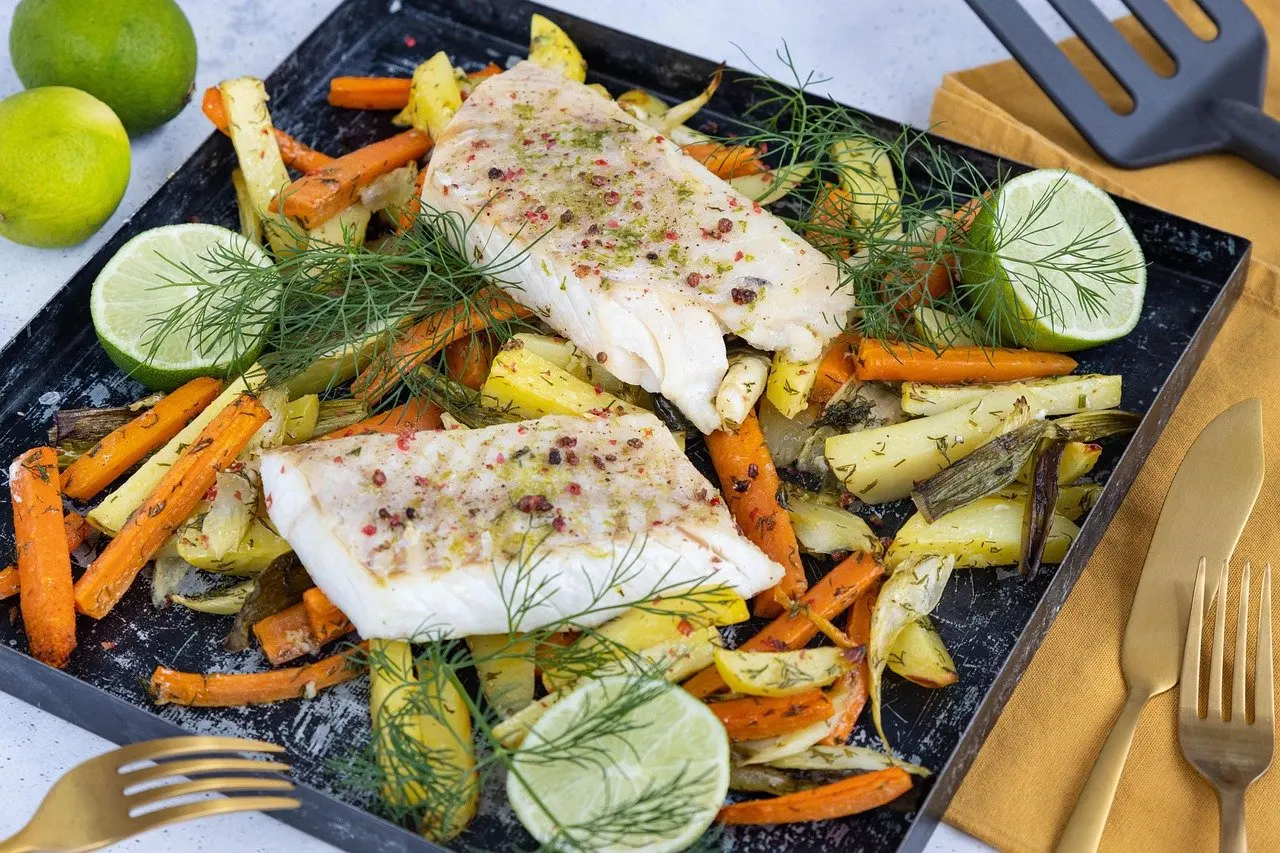
Fish and seafood are the protein the plan returns to several times a week, so fish dinners belong in the calendar from the start. Baking is the simplest method: fish on a tray with potatoes, tomatoes or other vegetables, finished with extra virgin olive oil, needs little attention. Space the fish dinners across the week rather than bunching them, so that legume dinners fall between them.
The 14-day rotation
A 14-day plan avoids repeated meals by keeping the weekly frequencies fixed and rotating the ingredients inside each slot. Keep the first week as written, then change the legume, the grain and the way the fish is cooked in the second week.
- Swap the legume. Move from lentils and chickpeas to white beans and black beans, drawing on the full range of legumes in the shopping list.
- Swap the grain. If the first week used farro and barley, use quinoa, bulgur or brown rice in the second, keeping grains in unprocessed forms.
- Change the fish preparation. A tray bake in the first week can become a seafood stew or a fish-and-bean dish in the second.
- Repeat on purpose. Some convenient items can return on later days. The vegetarian plan above repeats its fruit energy balls on multiple days for exactly that reason.
- Keep red meat out of the calendar. It is limited to a few times a month, so a 14-day plan can omit it or place it at a weekend dinner.
Rotating ingredients rather than whole recipes keeps shopping and prep nearly identical from week to week while the plates look different.
Prep and shopping strategy
Shopping and prep are what make the plan sustainable. A published plan promises make-ahead tips that keep eating consistent without spending all day in the kitchen. Cook the soup or stew, a grain and a tray of vegetables in one session, then assemble lunches from them.
Pantry staples
- Legumes: lentils, chickpeas, black beans and white beans.
- Whole grains: quinoa, brown rice, bulgur, oats and whole-wheat pasta.
- Fats: olive oil, avocados and tahini.
- Fresh items: fish for the early-week dinners, plus vegetables and fruit to cover half of every plate.
For the breakfasts that sit around these staples, see these mediterranean diet breakfast ideas.
Adjusting the plan for different needs
The plan adapts because Mediterranean approaches are flexible and offer many options. The vegetarian variant keeps the structure but replaces fish with plant protein, mainly legumes, whole grains and tahini. Dairy is optional in that version, so Greek yogurt, kefir, goat cheese and feta can be added or dropped without changing the rest of the week.
Anyone with a medical condition, or who is making a large change to current eating habits, should consult a healthcare provider or registered dietitian before changing their diet. The published plan gives that advice, and it applies to every swap above.
Troubleshooting the plan
- The week feels repetitive. Change the legume and the grain first, since those two swaps alter most plates.
- Prep did not happen. Rely on leftover soup for lunch and a repeated snack, as the plan allows for convenient items to return.
- A fish dinner is missed. Move it to a later day in the same week instead of dropping it, because fish is meant to appear several times a week.
- No dairy is wanted. Leave out the yogurt breakfast and keep oats or toast in its place; dairy is optional in the vegetarian version.
Frequently asked questions
Are snacks part of the plan?
Snacks are optional. Each day includes three meals, and snacks can be added if wanted, such as fruit energy balls that are repeated across several days.
How can sliced apple be prepared ahead?
Slice the apple in advance and toss it with lemon juice to prevent browning.
Can breakfast be made the night before?
Yes. Overnight oats soak in the fridge, so they are ready in the morning with no cooking.
What does the 14-day plan focus on?
It is built around foods rich in antioxidants, omega-3 fatty acids and fiber, which the source ties to healthy aging.