An adult cannot find any vaccination record and wonders whether measles still matters. For vaccino morbillo adulti, the supported answer is yes: adults without proof of vaccination or past disease should receive at least one MPR dose.
Italian guidance on this vaccine sits within the wider adult vaccination schedule italy, and this guide covers the measles part: who is exposed, how many doses to ask about, and what to do when cases appear nearby.
Measles is not only a childhood disease
Measles in Italy still reaches adults. In 2024, children under four had the highest measles incidence, and people aged 15 to 39 had the second highest, according to Statista’s age breakdown of Italian cases. Young and middle-aged adults are therefore a visible part of the problem, not bystanders. The same source notes that Italy registered the sixth-highest number of measles cases among European countries in 2023.
Several assumptions keep adults from acting. The table below sets each one against what the evidence supports.
| Common assumption | What the evidence shows | Planning use |
|---|---|---|
| Measles only affects small children | Ages 15 to 39 had the second-highest incidence in Italy in 2024, after children under four. | Adults in that age range should treat their own status as a live question. |
| No record means nothing can be done | Adults with no proof of vaccination or past disease should receive at least one dose. | A missing booklet is a reason to ask a doctor, not a reason to wait. |
| The vaccine needs to be kept apart from other jabs | MPR can be given at the same time as any other vaccine. | Measles can be dealt with during a visit planned for another vaccine. |
The age pattern comes from Statista, and the dose and co-administration points come from the Vaccinarsi in Trentino MPR page.
How many doses an adult needs
The Italian childhood schedule for the MPR (measles, mumps, rubella) vaccine has two doses: the first at 12 to 15 months and the second at 5 to 6 years, as set out by Vaccinarsi in Trentino. An adult who completed that course as a child has nothing further to do. An adult who cannot show it has a different starting point.
No proof of vaccination or past disease
Adults who cannot show either proof of vaccination or evidence of past measles should receive at least one dose. The wording is a minimum, so a doctor may still decide on a second dose to complete the schedule. The supplied evidence gives no birth-year cut-offs, so ask a doctor or local health service how your age group is treated rather than assuming a rule from a birth year.

When the second dose is worth discussing
A second dose can be given after a minimum interval of 28 days from the first when faster protection is needed. The reason to complete the course is protection: the CDC says two doses of MMR vaccine offer 97% protection against measles and one dose offers 93%, as reported in a pharmacy resource summarising CDC travel guidance. One dose is a real gain over none, and the second adds a smaller but useful margin.
What measles can do to an adult
Measles can cause serious complications, including pneumonia, blindness and encephalitis, and it can be deadly, as an NPR report on Italy’s vaccination law puts it. These are the outcomes that make an unresolved vaccination record worth settling, since an adult with no protection has no buffer against them.
The disease is also highly visible in outbreaks: the infection spreads easily where vaccination is patchy, which is why hospitals use isolation precautions to contain cases.

Coverage, herd immunity and Italian outbreaks
Herd immunity explains why one adult’s status matters beyond that adult. An expert quoted by NPR said that when the vaccination rate is around 95 percent, the virus is not able to circulate in the population. That figure is a population target, not a personal threshold, and it falls short whenever coverage slips.
Coverage did slip in Italy. Measles vaccination among two-year-olds was about 90% in 2010 and fell to 85.3% in 2015, according to the same NPR report. In 2017 the Italian Health Ministry recorded more than 2,500 measles cases, a tenfold rise from two years earlier, and Italy made vaccines against 12 diseases, including measles, mandatory that year.
Children who went unvaccinated in those years are now adults, and so are adults who simply missed doses earlier. For current case counts, which change as outbreaks develop, the Istituto Superiore di Sanità measles bulletin is the place to check.
Safety, side effects and who should wait
The practical risks of the vaccine are small and well defined. These are the points to raise with the person giving it:
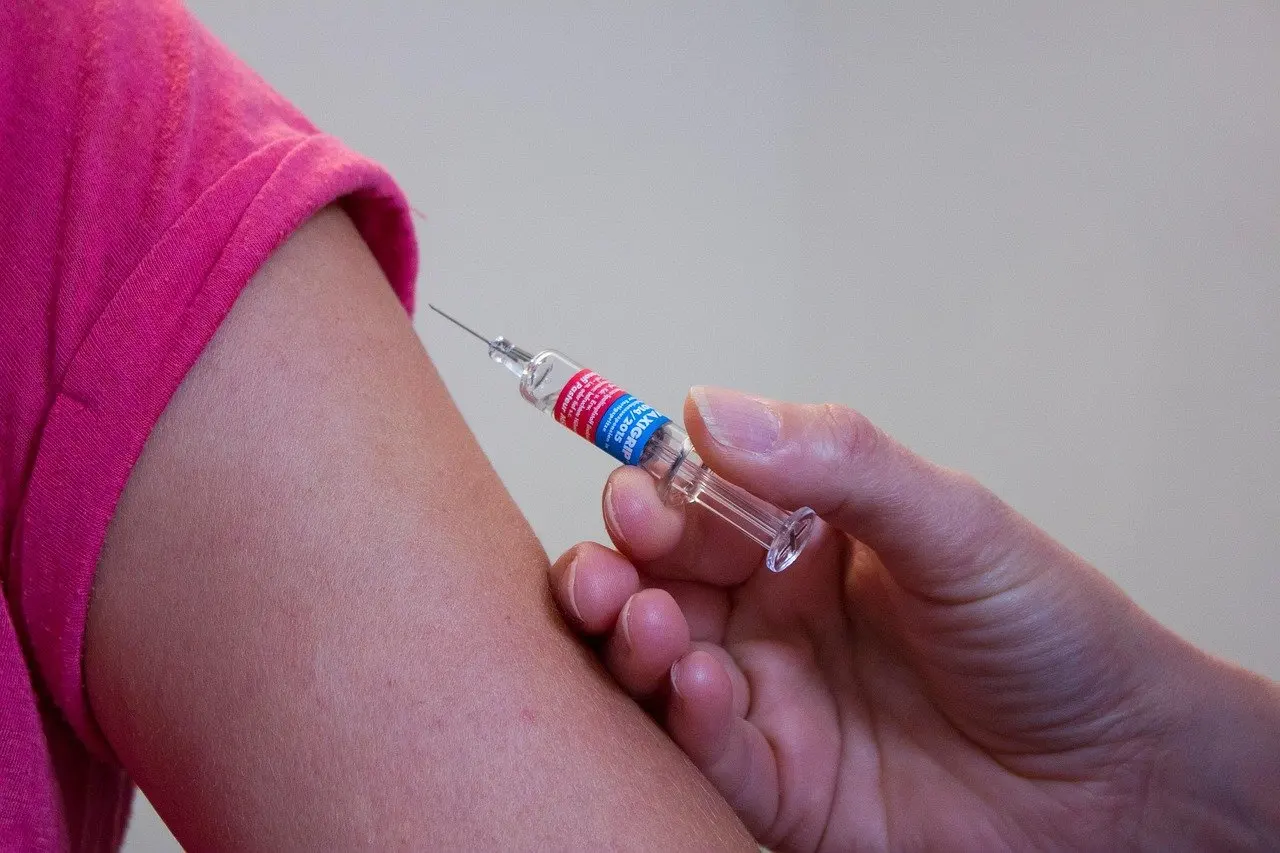
- Common reaction. Fever occurs in up to 1 in 6 vaccinated people, according to the Vaccinarsi in Trentino page.
- Rare reaction. Severe allergic reactions are rare, at fewer than 1 case per million doses.
- Who should not be vaccinated. Anyone who had a severe allergic reaction to an earlier dose, to neomycin or to another component should not receive it.
Tell the vaccinator about any past allergic reaction before the injection. If you are unsure whether a reaction was severe, ask a doctor before the appointment rather than skipping the dose.
Checking what you have already had
Start with paper evidence. A vaccination booklet or certificate showing the measles or MPR entries settles the question. A confirmed past case of measles also counts. Without either, the supported route is a dose.
- Look for records. Check any childhood booklet, family copies or earlier health documents for MPR entries.
- Ask a healthcare professional. A doctor can interpret partial records and decide whether one dose is enough or whether to complete the two-dose course.
- Combine appointments. Adults already arranging a booster such as the vaccino pertosse adulti can raise measles status at the same appointment.
When there is an outbreak in your area
An outbreak turns a vague intention into a time-sensitive task. The first step is to establish your own status, using the record check above, and then contact a doctor or local health service if there is no proof of vaccination or past disease. Ask about the shortened interval between doses described earlier if protection is needed soon.
Travel adds a separate trigger. The CDC recommends that all travellers are fully vaccinated against measles for any international destination, and says those unsure of their status should consult a doctor at least six weeks before they leave. The same pharmacy summary of CDC advice notes an Idaho case linked to an unvaccinated adult who had travelled to Europe, a reminder that one unprotected adult can carry the disease across borders.
Frequently asked questions
| Question | Answer |
|---|---|
| Is the measles vaccine a live vaccine? | Yes. The MPR vaccine is made with live viruses that have been made harmless, and it is given by subcutaneous injection. |
| Can I become pregnant after the vaccine? | Women vaccinated with MPR should avoid pregnancy for 4 weeks afterwards. |
| Does the MPR vaccine cause autism? | No. Many studies have excluded any link between the MPR vaccine and autism. |
| Where do I find current Italian case counts? | The Istituto Superiore di Sanità measles bulletin is the place to look, because counts change as outbreaks develop. |